After Sega left the home-console business, building a wider content portfolio became one route to long-term growth. In 2013, Atlus’s game business joined the SEGA SAMMY Group through Index. In August 2023, SEGA Europe completed its acquisition of Finnish mobile-game company Rovio, which became a group company. One brought role-playing series such as Persona, Shin Megami Tensei, and Etrian Odyssey. The other was known for Angry Birds and global mobile-game operations. They joined the same group without becoming the same kind of game.[history][integrated-2023]
Why did Atlus bring more than a single game?
When Atlus joined the group in 2013, it already had long-running game brands and committed fan communities. SEGA SAMMY’s annual report specifically mentions Persona, Shin Megami Tensei, and Etrian Odyssey. For the group, the deal expanded its content lineup. For players, it looked more like different creative teams continuing under one corporate umbrella. Atlus games have their own narrative habits, character design, and player language. Their value is not in turning them into “Sega-style” games. It is in giving them room to keep developing their original identity.[annual-2009]
I care about this distinction. Corporate growth is sometimes described as a collection of trademarks, as if placing famous names together automatically creates more creativity. But every series has developers, systems shaped over time, and expectations formed with players. A group structure can provide funding, publishing channels, or global promotion. Whether the content keeps its personality still depends on the team’s decisions. The interesting question in Sega’s relationship with Atlus is how a larger group makes room for difference, not how it removes difference.
What mobile expertise did Rovio add to Sega?
In August 2023, SEGA SAMMY completed its acquisition of Rovio. The official integrated report says Rovio is based in Finland, develops and operates mobile games, and also licenses its IP. Sega said it wanted to strengthen its global game-development capabilities, especially in mobile development and operations. This motive differed from Atlus’s creative legacy. The acquisition was not only about adding new games. It was also meant to bring more mature experience with mobile-game services.[integrated-2023]
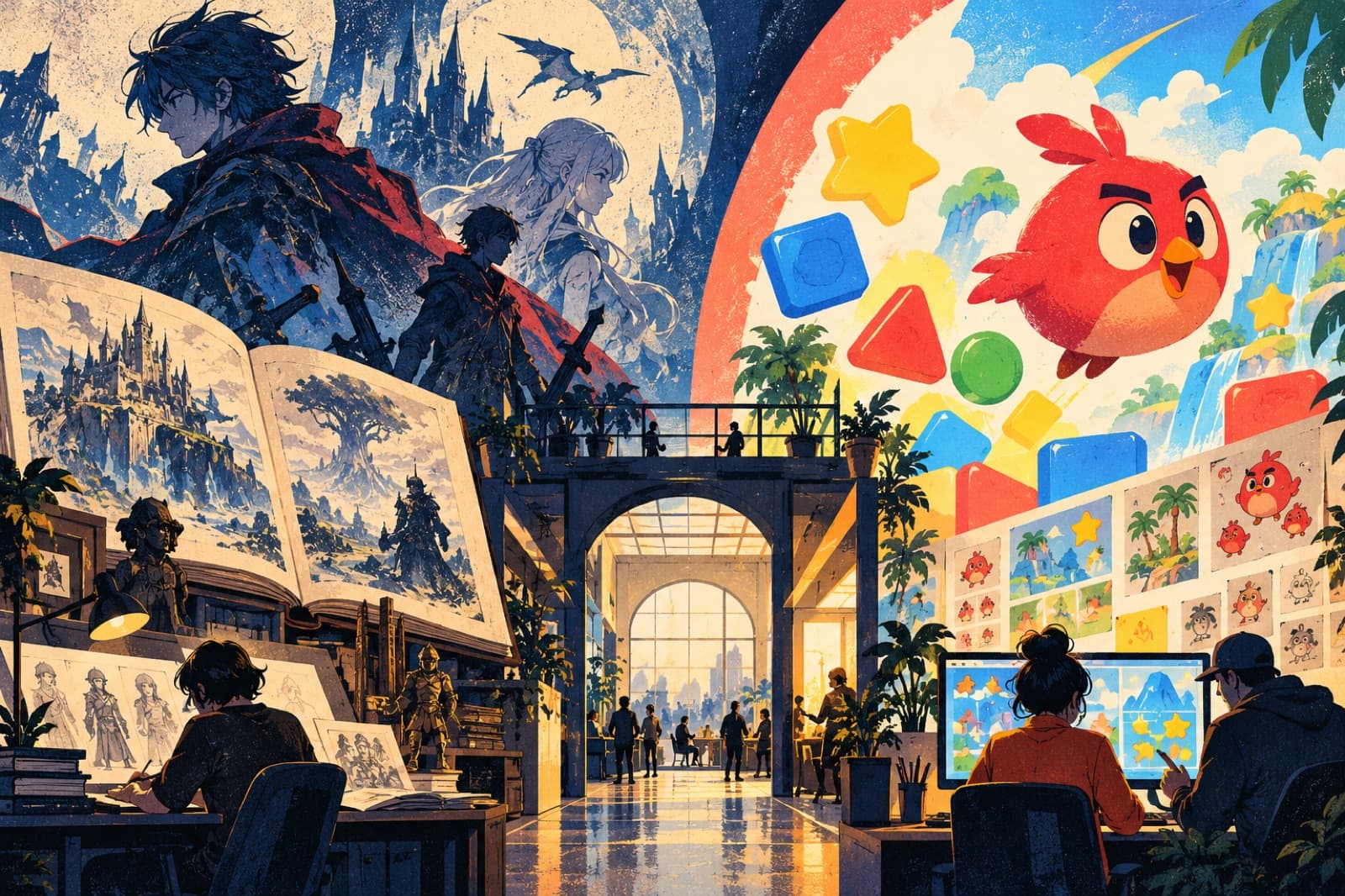
Mobile games often have a different life cycle from traditional home-console games. Players may open an app every day or return through events, social features, and ongoing updates. A studio must make a fun game and understand how players keep using it. Rovio’s arrival gave SEGA SAMMY a place to consider its characters alongside mobile-platform expertise. That creates opportunities and integration risks. The company report explains the reason for the acquisition, but an objective is not the same as a result already achieved.
Can one group serve players with different rhythms?
Atlus players may spend dozens of hours on a long role-playing journey. Rovio’s mobile games are closer to short sessions in daily life. Sega’s own Sonic, Ryu ga Gotoku, strategy titles, and arcade games each have different player habits. Bringing them into one group means managing different development cycles, release methods, community interactions, and revenue sources. Teams can share publishing experience, but they cannot simply copy each other’s design methods.
From a player’s point of view, I find this mix compelling. One group can support very different rhythms of play. Some people play a level on the commute. Others spend a weekend in a long story or meet friends at an arcade. These activities all belong to game culture today, but they do not need to be compressed into one model. For an IP portfolio to feel alive, management must protect the reasons players stay, not only track the numbers.
Do “SEGA SAMMY” and “Sega games” mean the same thing?
The Rovio acquisition and Atlus’s arrival were expansions at the SEGA SAMMY Group level. They should not be described as if all the work came from one Sega console-development team. SEGA SAMMY is a holding group with several business segments. Its Entertainment Contents business includes consumer games, arcade content, animation, and toys. This structure lets the group operate across forms of entertainment, and it asks us to be precise about which company or brand did what.[history][integrated-2023]
As I write this chapter, I remind myself not to frame every acquisition as a story of inevitable success. These were strategic choices made at a particular time. It takes years to understand their actual effect. Between 2013 and 2023, Sega’s group expanded from game studios and IP into mobile-game development and operations. That represents a change in corporate ambition. Players will still judge the change through the games themselves. An acquisition announcement describes the starting point; the games have to provide the answer.
Does a wider portfolio make management easier?
A broader IP portfolio can create more chances for remakes, multi-platform releases, and cross-media partnerships. It does not automatically make every project better. Each series needs a suitable production rhythm, room for its team, and a way to speak to its audience. The group has to coordinate resources. Players will keep asking whether a new game understands why they cared about the series in the first place. There is no one-time answer. Each release has to answer it again.
So integration should be judged by more than revenue: Are teams still producing? Can series evolve? Can players in different regions reach the games? Atlus and Rovio bring different strengths; only sustained work can show whether they complement each other. An acquisition states an intention. Later releases show how the capabilities work together.
After expansion, can creative teams keep room to create?
From a group’s perspective, an acquisition can bring brands, talent, and market experience. From a creative team’s perspective, the important question is often whether it can keep making its own work after joining. When Atlus entered the group, players watched to see whether Persona and Shin Megami Tensei would retain their familiar voice. After Rovio’s acquisition, one question was whether its mobile-game operations could develop long-term collaborations with other group IP. Neither company’s value can be judged from an organizational chart alone. We need to see how teams work, how games are released, and whether players still want to return.
This also asks us to distinguish shared resources from a unified creative style. A group can look for collaboration in publishing, promotion, technology, or licensing without turning every studio into the same kind of studio. For a long-running series, players remember more than a name. They remember its rhythm, themes, and whether it respects their time. If organizational change makes these qualities easier to bring to a global audience, expansion may create room. If it only produces a list of brands, size will not give the games more appeal by itself.
I prefer to view the period from 2013 to 2023 as a process still waiting to be evaluated. Atlus’s game business and Rovio’s mobile expertise gave the group different capabilities, but a strategic goal is not the same as a final result. Future discussion should follow more than revenue. It should ask whether teams keep producing work, whether series can renew themselves, and whether players in different regions actually meet the games. An acquisition is a date on a timeline. How an organization absorbs the change is a longer history. For the 2026 business context, see Sega’s current strategy and next steps.