Some corridors look alike until memory begins to separate them. Metroid uses repeating doors, branches, and terrain to let players build their own sense of direction. The map is there; it just starts in your head.
With no map, which doorway stays in your mind?
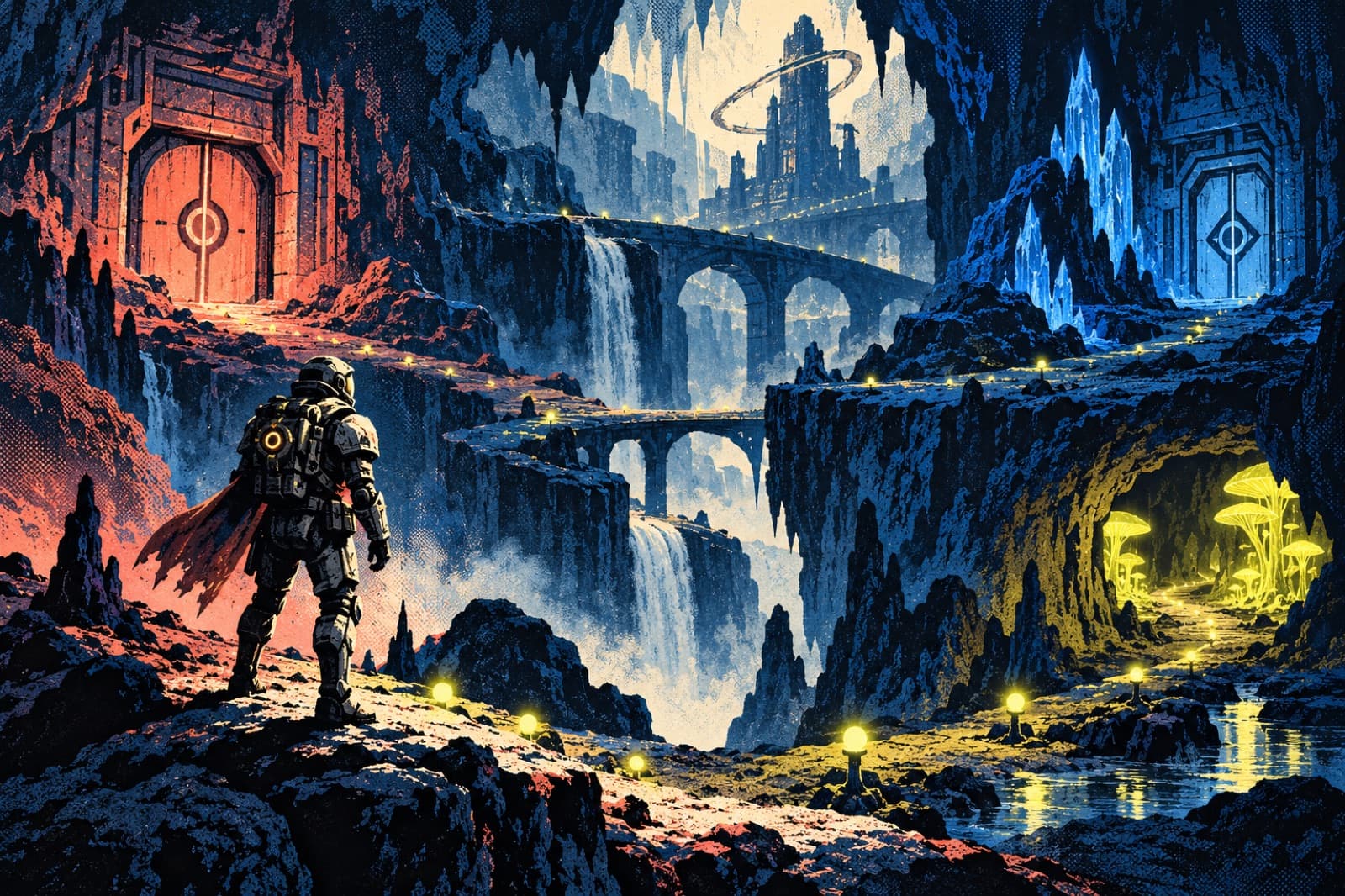
A wall with a distinct color, a long vertical shaft, or an obstacle you cannot pass yet can all become memory markers. A new ability does not send you wandering at random. You remember that red door.
How can a wrong turn bring you closer to the goal?
An exploration game does not need every step to point straight at the goal. A wrong turn makes the terrain more familiar, and a shortcut can make an old area matter again. The best map often takes shape on the second visit. For a design built around speed and route rhythm, see how Sonic made speed a 16-bit signature.